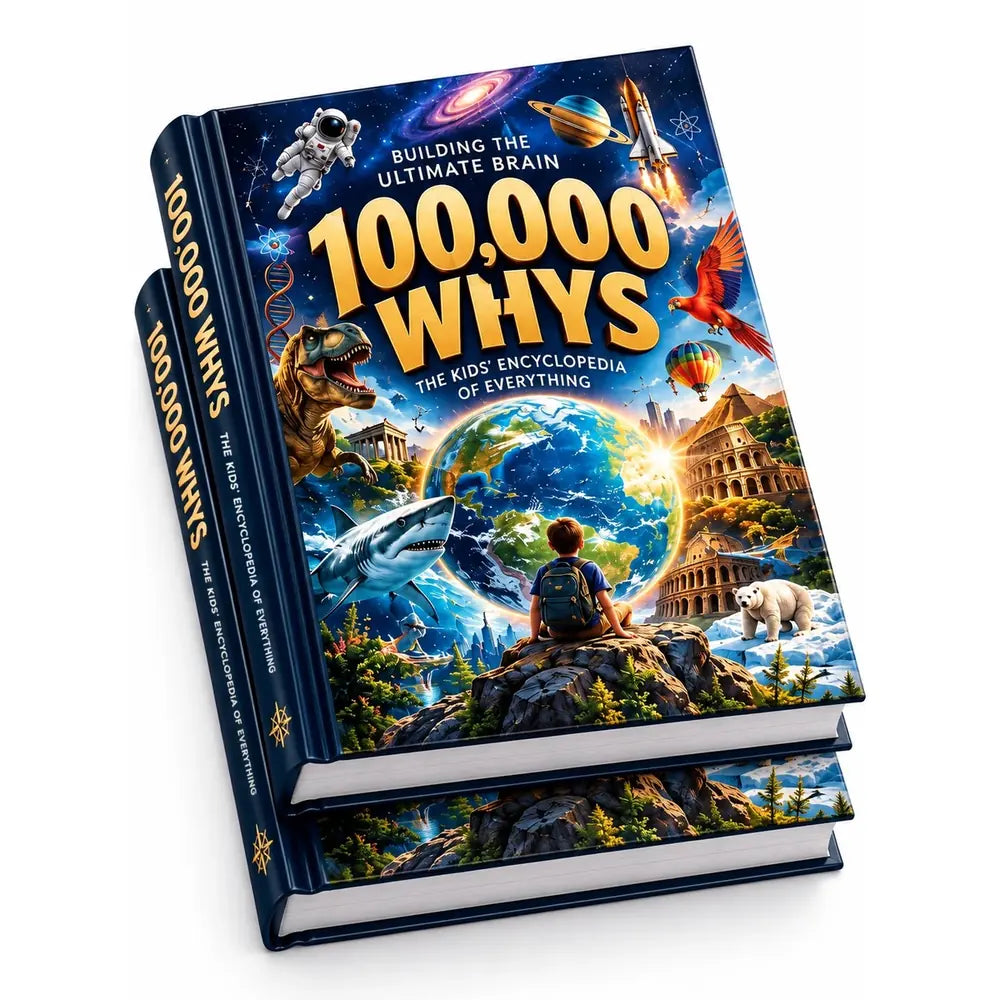
Your kid asks “why” all day. 7 reasons this one book keeps up.
Your grandchild asks “why” all day. 7 reasons this is the gift that keeps up.
 From the Curio Cub team · 4-minute read
It starts at breakfast. Why is the sky blue? Why do cats purr? Why does the moon follow our car? By bedtime you've answered forty of them, or said “let's look it up” and watched a tablet answer first, with autoplay and an ad.
The curiosity is the best part of this age. It just needs a better place to go. Here are seven reasons a big illustrated hardcover might be the best thing you put on your coffee table this year.
Every page starts with a question kids actually ask
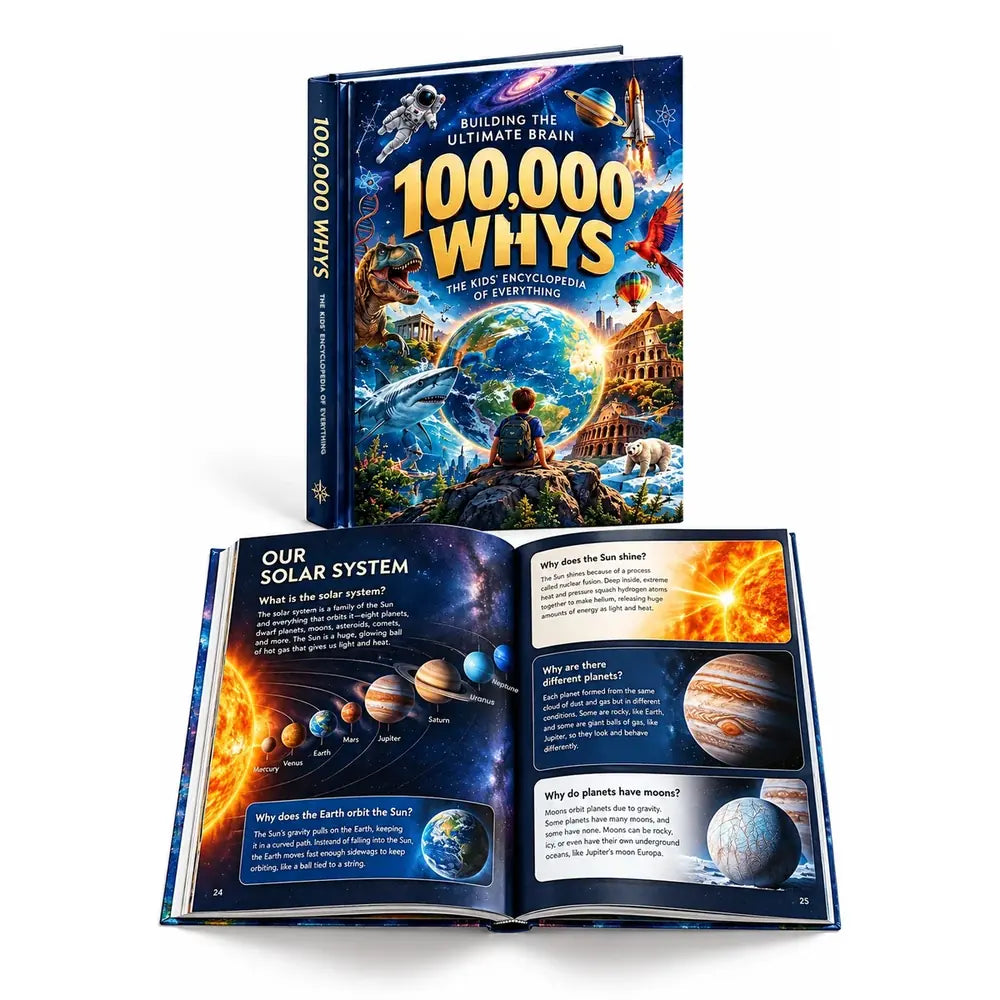
Most kids' encyclopedias are organised like a textbook: chapter, topic, wall of text. 100,000 Whys starts where your kid already is, mid-question. Each entry opens with a real “why”, answers it in words a 7-year-old understands, and leaves them wanting the next one.
You don't need to know the answers
This is the part most of us worry about. Good news: kids don't need a grown-up who knows everything. They need one who says “I don't know either. What do you think?” and then finds out with them. The book does the knowing. You do the wondering together.
It turns dinner into a 5-minute game
Read one question out loud. Close the book. Ask “What do you think?” Let them guess, however wild. Then open it and find out together. No lecture, no homework feeling. Just “I found something interesting”, never “I found something good for you.”
It's big: 200+ topics and 1,000+ illustrated entries
Space, animals, the human body, planet Earth, history, science and the inventions we use every day. Whatever they're wondering about this week, there's a good chance it's in here, with a picture that makes a hard idea land in a glance.
No screen. No autoplay. No ads.
Search engines answer for adults. Video apps answer with the next video. AI answers anything, instantly, so the child never has to wonder. A book answers and then stops, which is exactly when the next question starts.
Curiosity is a habit, and these are the years to build it
You have the time parents often don't
A curious child isn't born that way by luck. Curiosity is practised: following a question, guessing, finding out. The primary-school years, while they're still asking “why” about everything, are the natural time to build it. Education thinker Sir Ken Robinson put it simply: “We don't grow into creativity, we grow out of it.” A few minutes a day with a question is how you keep it.
Unhurried time is exactly what curiosity needs. One question per visit, two pages at bedtime when they stay over, or a “did you know?” on the phone call. And the 5-book stack comes with “The Window”, our free guide with a whole chapter for grandparents.
The coffee-table test: if they don't pick it up, you don't pay
Don't take our word for it. Put the book on the coffee table and don't say a thing. If your kid doesn't pick it up on their own within 30 days, email us and we'll refund your order in full.